
This is exactly what we hear from so many families of children who use a wheelchair: and it is the very first line of a new report on NHS wheelchair services, which can be read here, by the Public Service Ombudsman.
The Ombudsman, whose role is to investigate individual complaints about public services and identify wider systemic problems, has carried out a detailed review of complaints about wheelchair services in England for children and adults.
An increase in complaints
There has been a 13-fold increase in complaints to the Ombudsman about wheelchair services in the last five years. Complaints focus, as you might expect, on things like long waits, poor communication and poor record-keeping.
And the report pulls no punches on the consequences for children and their families when services fail to provide what they need.
Education, independence and fun
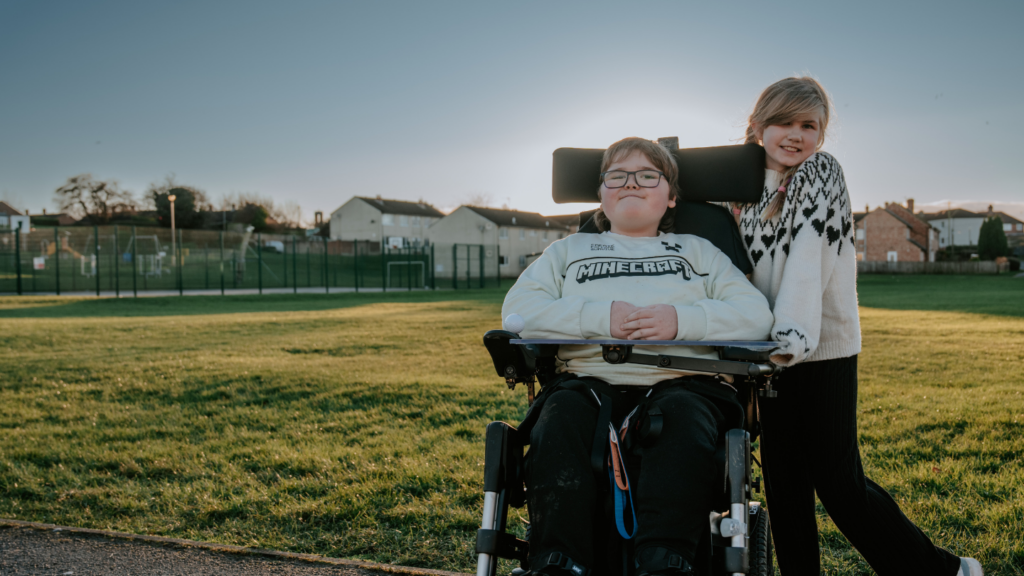
For a child who relies on a wheelchair, it can be the single thing that makes the biggest difference to getting out and about with their family and friends, going to school and activities, having some independence, and – especially – having fun.
Having the right wheelchair for their needs not only keeps children safe and protects their posture, it also enhances their independence and confidence. The Ombudsman’s report recognises that NHS wheelchair assessments should consider not only a child’s medical needs but also what they need in order to access education and other activities.
The wrong wheelchair, or no wheelchair at all, leaves children unable to attend school and families forced to adapt their lives around unsuitable or unsafe equipment. This is spelled out in several powerful case studies of disabled children in the report.
How the NHS can get it right
The report focuses on ‘strategic commissioning’ of wheelchair services by the NHS. What this means is the process of understanding what the needs are of the population in a particular area, making sure the right services are available, and monitoring whether what people need is being delivered.
It isn’t the same as simply buying a service: it’s about planning and overseeing services to make sure they work for people. Local NHS organisations called Integrated Care Boards (ICBs) are responsible for commissioning wheelchair services, even if services themselves are provided by independent organisations.
The Ombudsman concludes that commissioning failures are widespread and identifies several particular problems.
Lack of basic information
Commissioning can only work if the organisations who are responsible for understanding the needs of the people in their area have accurate data about what those needs are.
But the Ombudsman concludes that ‘there is no accurate picture of the number of wheelchair users in England’. There is also a lack of information about changing needs, which is especially crucial for children.
The report also notes, ‘Existing data only captures what has been previously funded and does not help commissioners understand unmet need.’
Unmet need is the crux of the issue. Charities like Newlife fill a gap in provision for disabled children. But it’s no good to anyone if commissioners don’t know how much unmet need exists in their area.
Restrictive local eligibility criteria
National guidance is clear that wheelchair services should consider the full range of children and adults’ needs – not just their clinical need for a wheelchair but also the life they have and the things they want to do.
The Ombudsman’s report notes that ‘there is a gap between this ambition and what services fund in practice’. The result is that too many children and adults don’t have access to wheelchairs that would support their independence and participation in everyday life.
The report also highlights evidence that considering an individual’s full range of needs represents an ‘invest to save’ approach. In other words, spending money on equipment now can save money in the long term.
Poor quality services
The report finds that NHS commissioners don’t always respond well to concerns about the quality of service delivered by a particular wheelchair provider. It turns out that ICBs aren’t good at sharing information with each other about problems with specific independent providers, in order to manage these collectively.
The Ombudsman also identifies a ‘regulatory gap’, where wheelchair assessment, fitting and repair services sit outside the framework for regulating health and care. This means there is insufficient oversight of the quality of service provided by independent providers.
Learning the right lessons
The question that everyone involved in children’s wheelchair services should be asking is: are these services improving children’s health, independence and wider wellbeing?
The Ombudsman says that whether services are any good or not should be measured by the experiences and outcomes of people who use and rely on them – including disabled children and their families.
We agree.
At Newlife, we know that having the right equipment, at the right time, can transform lives. We want to help policymakers understand that long delays in providing essential equipment or carrying out repairs aren’t just an administrative inconvenience – they limit children’s short-term opportunities and long-term outcomes.